Specialty Kids Dental Care
Peak Pediatric Dentistry offers advanced treatments designed to address your child’s unique dental needs. Our specialty services include tongue and lip tie revisions, white spot removal, IV sedation (sleepy dentistry), space maintainers and orthodontic consultations, remineralization treatments, and professional whitening. These options provide gentle solutions for your child’s smile, helping to improve feeding, speech, growth, and overall oral health.
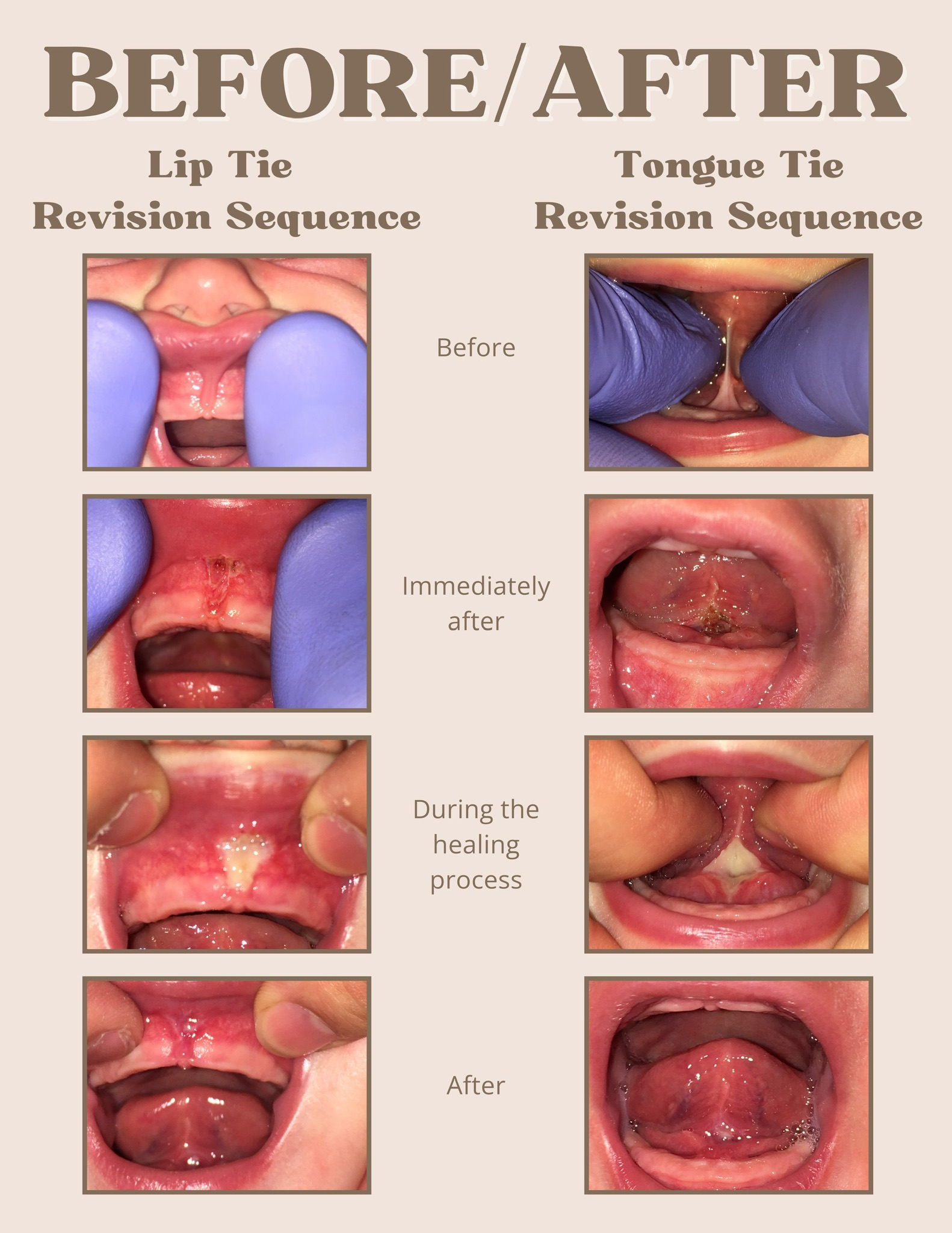
Laser Lip & Tongue Tie Release (Pediatric Frenectomy)
Sometimes a small piece of tissue under your child’s tongue or upper lip is too short or tight. This can make nursing, eating or talking harder for your child. A simple procedure called a frenectomy gently releases this tissue so your child can move their tongue and lip freely and comfortably.
Symptoms
- Babies & Nursing Moms: Trouble staying latched, clicking or popping sounds while feeding, fussiness and gassiness after nursing, long feeding sessions or a baby who falls asleep from exhaustion. Moms may feel pain, have sore or cracked nipples, or struggle with plugged ducts or mastitis.
- Toddlers & Children: Difficulty saying certain sounds clearly, speech delays, a tight upper lip affecting how front teeth come in or interact with braces, difficulty clearing food from tooth surfaces because the tongue can’t sweep properly, and potential airway concerns.
Laser Procedure
We use a soft‑tissue laser for frenectomies. It works quickly—often in just a few minutes—and seals tiny blood vessels as it goes. That means minimal bleeding or swelling, no stitches, and a fast recovery.
Post‑Op Care
You’ll be able to nurse or comfort your child right away. We’ll show you simple stretches to keep the area open while it heals—doing these stretches is important for the best result.
Follow‑Up
We typically combine the consultation and procedure in a single appointment and schedule a one‑week post‑op visit afterward. At the follow‑up we’ll check healing, answer questions, and can connect you with lactation or speech specialists if needed.
Summary
A frenectomy appointment usually takes about one hour for both the consult and release. Most dental insurance plans cover the procedure, but we encourage families to verify their benefits. We perform laser frenectomies every day at our Lehi and South Jordan offices, so your child can be seen quickly and get back to feeding, speaking and growing comfortably. We also collaborate closely with local lactation consultants and speech therapists to ensure your child has the support they need before and after treatment.

What Are White Spots on Teeth?
White spots are early signs of enamel demineralization—areas where minerals like calcium and phosphate have been lost from the tooth surface. These can show up as:
Chalky white patches after braces
Flat, dull spots on front teeth
Early signs of tooth decay
Fluorosis-related discoloration
They’re not stains, and whitening won’t fix them. But non-invasive treatments like Curodont™, Icon Resin Infiltration, hydroxyapatite, and other enamel-rebuilding techniques can.
Our Approach to White Spot Removal Icon Resin Infiltration.


What is ICON?
◭ Icon is a minimally invasive treatment designed to erase white spots on teeth—without drilling, numbing, or removing healthy enamel.
◭Think of it like fixing a crack in a windshield.
The outer layer of a tooth is translucent like glass. White spots happen when minerals underneath reflect light differently.
Icon gently replaces that area with a clear resin so light passes through normally again, fading about 80–90% of the spot without drilling tooth away like a crown or veneer.
How White Spots Form
White spots on teeth can form for a variety of reasons:
》Dental Trauma—where an injury to a baby tooth can disrupt the formation of the adult tooth beneath it, leading to discoloration when it erupts.
》Enamel Hypoplasia and Hypomineralization—conditions where enamel doesn’t fully form or mineralize—can also result in white, chalky, or uneven patches on the teeth.
》Poor Oral Hygiene— especially during orthodontic treatment, as plaque buildup around braces can lead to demineralized areas.
Even after braces are removed, these spots can remain.
No matter the cause, white spots are often harmless but can impact your child’s confidence and may increase the risk of future decay—making early evaluation and treatment a smart choice.


Space maintainers
Space Maintainers play a crucial role in guiding your child’s dental development.
When baby teeth are lost too early—whether from injury, decay, or extraction—it can disrupt the natural spacing needed for permanent teeth to grow correctly.
Without intervention, neighboring teeth may drift into the gap, leading to crowding, bite problems, or even impaction of adult teeth.
By holding space until the permanent tooth is ready to erupt, space maintainers help ensure proper alignment, reduce the need for future orthodontic treatment, and support the healthy growth of the jaws and facial structure.
With early, proactive care like this, we can help set the foundation for a lifetime of confident, healthy smiles.
When and Why We Recommend IV Sedation for Children
When is it the Best Option?
At Peak Pediatric Dentistry, we aim to treat children using the most conservative and proven methods possible.
But in certain cases, IV sedation is the safest and most effective way to complete dental treatment—especially when a child is very young, has significant treatment needs, or cannot safely cooperate due to behavioral or developmental challenges.
We only recommend IV sedation when it’s truly necessary, and we partner with highly trained pediatric anesthesiologists to ensure the process is handled with the highest level of safety and care.


1. Young Children with Extensive Treatment Needs
Children under age 4 who have multiple cavities, need crowns, or have infections that require urgent care are often too young to sit through multiple dental appointments. Even with the most patient and gentle approach, some kids simply aren’t developmentally able to tolerate treatment while awake.
IV or conscious sedation allows us to complete all necessary work in one visit while your child sleeps comfortably. This prevents trauma, reduces the need for repeat appointments, and protects the developing trust your child has with the dental team.
2. Children with Behavioral or Sensory Challenges
Some children have conditions such as ADHD, anxiety, autism spectrum disorder, or sensory processing difficulties that make it extremely difficult to sit still or feel safe in a dental setting. In these cases, even simple procedures can feel overwhelming.
We do everything we can to accommodate these kids without sedation first—but when it becomes clear that treatment can’t be done safely while awake, IV sedation becomes a tool to prevent distress and protect their overall experience. One bad visit can create dental fear for years to come—we’d rather avoid that entirely.
3. Children with Medical or Developmental Disorders
For some children with physical, cognitive, or neurological disorders, IV sedation is not optional—it’s the only safe way to provide dental care. These children may have limited understanding, poor impulse control, or medical conditions that make cooperation risky. Trying to “push through” a dental visit in these cases can lead to injury, trauma, or incomplete treatment.
With IV sedation, we can provide comprehensive care while your child rests peacefully, without stress or memory of the procedure. Parents often tell us it’s a relief to finally get their child the care they need without a struggle.

Remineralization Treatments and Whitening
Fluoride
1. Initial Dental Assessment
Before starting any fluoride treatment, your dentist performs a thorough dental exam to assess your teeth and determine your cavity risk. This step ensures the fluoride application is customized to your specific oral health needs.
- Teeth Cleaning and Preparation
Your dentist or hygienist will professionally clean your teeth to remove plaque and tartar. This allows the fluoride to bond effectively to the enamel, maximizing the treatment’s protective benefits.
- Application of Fluoride
The fluoride is applied directly to your teeth using a gel, foam, varnish, or rinse. These concentrated formulas contain a high level of fluoride to strengthen tooth enamel and reverse early signs of tooth decay.
- Short Absorption Period
After application, you’ll be asked to avoid eating, drinking, or rinsing for at least 30 minutes. This short waiting period allows the fluoride to fully absorb and provide long-lasting protection against cavities.
- Post-Treatment Recommendations
Your dentist will offer aftercare tips and may recommend a schedule for regular fluoride treatments based on your oral health. Consistent fluoride treatments can significantly reduce your risk of tooth decay and strengthen enamel over time.
Hydroxyapitie:
- Personalized Dental Assessment
Before beginning treatment, our dentist will examine your child’s teeth and assess their enamel health. This helps us determine if nano-hydroxyapatite is the right choice to support their smile and prevent early decay.
- Cleaning and Preparing the Teeth
A gentle cleaning removes plaque and buildup so that the nano-hydroxyapatite can bond effectively with the tooth surface. This step is key to ensuring maximum mineral restoration.
- Application of Nano-Hydroxyapatite
Nano-hydroxyapatite is applied directly to the teeth through a specially formulated paste or treatment gel. This bioactive mineral mimics the natural structure of tooth enamel and works by filling in microscopic weak spots to rebuild and protect.
- Short Absorption Time
After application, we ask that your child avoids eating or drinking for about 30 minutes. This gives the mineral time to absorb into the enamel and start reinforcing the tooth structure.
- Ongoing Strengthening and Care
Your dentist will provide easy aftercare guidance and may recommend a regular schedule of nano-hydroxyapatite treatments. With consistent care, this gentle, fluoride-free option helps strengthen enamel, reduce sensitivity, and protect against cavities over time.

1. Curadont
Dental Examination and Diagnosis (ONLY ON PERMANENT TEETH)
Our dentist begins by identifying early-stage cavities (non-cavitated lesions) using a thorough exam and digital diagnostics. Curodont is ideal for these early enamel lesions, especially on smooth surfaces and between teeth.
- Cleaning and Isolation of the Tooth
The tooth is gently cleaned to remove any plaque or debris. We then isolate the area to keep it dry, which is important for the treatment to work effectively.
- Etching the Tooth Surface (if needed)
In some cases, a mild etching gel is applied for a few seconds to open the enamel pores and help the Curodont solution penetrate the lesion more effectively. The area is then rinsed and dried.
- Application of Curodont™ Repair
The dentist carefully applies the Curodont formula directly to the lesion. This peptide-based technology helps activate natural enamel regeneration by guiding calcium and phosphate into the tooth structure.
- Final Steps and Follow-Up
After application, the area is left undisturbed for a few minutes. No rinsing or drilling is needed. Your child can resume normal activities shortly after. We’ll recommend a follow-up schedule to monitor healing and may reapply as needed for optimal results.
In Summary
Incorporating remineralization treatments like fluoride, nano-hydroxyapatite, and Curodont® into your child’s dental care plan is more than just preventive—it’s proactive protection for their developing smile. These treatments work at a microscopic level to repair early enamel damage before it becomes a cavity, reducing the need for invasive procedures like fillings or crowns later on. By restoring lost minerals and supporting the tooth’s natural healing process, we’re able to slow—or even stop—the progression of early decay. This is especially important in children, whose enamel is thinner and more vulnerable to breakdown. Whether it’s the proven benefits of fluoride, the biomimetic strength of nano-hydroxyapatite, or the peptide-guided regeneration of Curodont®, each option offers a gentle, effective way to keep teeth strong, healthy, and pain-free. Our goal is to preserve your child’s natural teeth as much as possible—and remineralization helps us do just that, setting the foundation for a lifetime of better oral health.